
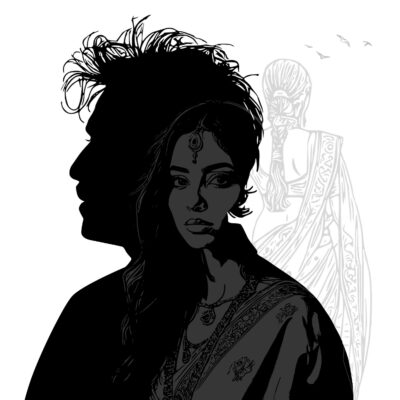
Deconstructing the Ghost: Devdas and the Illusion of Subjective Marriage in 21st-Century India

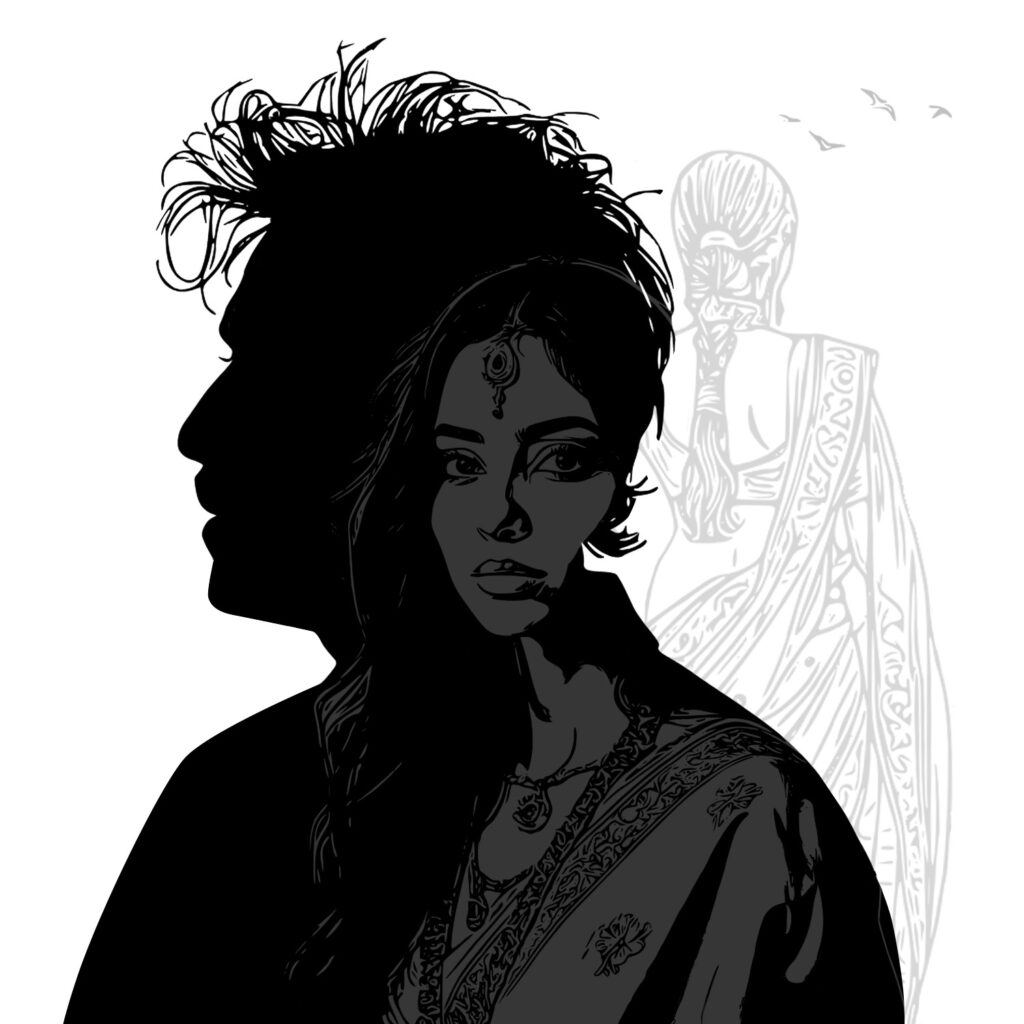
Abstract:
This article presents a deconstructionist reading of the Bengali novel Devdas, arguing that its enduring tragedy stems from a deep-seated structural conflict between individual emotional autonomy and collective social authority (caste, class, and family prestige).
The core argument is that in 21st-century India, the shift from rigid arranged marriages to “subjective” or “love” marriages is merely a rebranding of the cage. Traditional constraints have not dissolved but have been digitized and reconfigured as a “Digital Zamindari,” where social-economic filters (like Instagram reputation and compatibility scores) reinforce the same boundaries that destroyed Devdas’s love.
The paper uses theoretical frameworks from Jacques Derrida, Michel Foucault, and Pierre Bourdieu to show:
- Devdas is not a tragic hero but a vanishing point—a symbol of the self-negated by social structure, whose self-destruction is a “surrealist rebellion.”
- Parvati and Chandramukhi are presented as the true, yet contrasting, agents who navigate the structural constraints with far more clarity than the protagonist.
- The modern Devdas is a Simulacrum, suffering from “internal exhaustion” and the “Death of Eros” due to over-stimulation and the aestheticization of heartbreak, rather than external prohibition.
The conclusion is that the cultural ghost of Devdas persists because modern India has not resolved its fundamental contradiction: Love is a personal truth, but Marriage remains a social classification. This article offers a deconstructionist interpretation of the Bengali novel Devdas, asserting that its lasting tragedy arises from a fundamental structural conflict: the clash between individual emotional autonomy and the rigid constraints of collective social authority (caste, class, and family prestige).
Part I: The Architecture of Absence
Within this historical context, the Bengali novel Devdas occupies a unique position in Indian literary history. Written in the early twentieth century, the novel captures a moment of social transition in which modern ideas of romantic individuality began to emerge within the rigid framework of traditional society. The text of Devdas is not a sequence of pages in Indian literary history; it is a shattered mirror lying in the dust of a Bengal twilight. To read it is to participate in an autopsy of a ghost of Devdas that refuses to die.
In this deconstruction of social transition into the modern ideas of romantic individuality, we strip the skin from the narrative to reveal the clockwork of power and the surrealist landscape of the Indian psyche. Devdas is the zero point of the narrative. He is a protagonist defined entirely by what he cannot do. In the language of Jacques Derrida, he is the trace—a presence that only exists through the absence of his own agency. He stands at the threshold of the ancestral home, but the threshold is made of liquid lead. He is the “privileged scion”, who is simultaneously a “subjected body”. His descent into alcoholism is not a vice; it is a surrealist rebellion—a slow-motion suicide intended to “stain” the pristine white sheets of social hierarchy. He becomes a Foucauldian specimen: a body upon which the state and the family carve their laws.
The story of Devdas and Parvati is therefore not simply a narrative of doomed love. Instead, it reflects a deeper structural conflict between two competing social forces: Individual emotional autonomy and Collective social authority. The tragic trajectory of the protagonist Devdas illustrates the psychological consequences of this conflict. Devdas grows up within a privileged social environment but lacks the emotional courage to challenge the authority of his family and social norms. As a result, his love for Parvati collapses under the pressure of class hierarchy and familial prestige. His subsequent descent into alcoholism and self-destruction represents not only personal weakness but also the psychological impact of social constraint.
At the same time, the novel presents two female characters—Parvati and Chandramukhi—whose emotional strength contrasts sharply with Devdas’s indecision. These characters are not people; they are vectors of force colliding in a room with no exits.
- Parvati: She is the “Domestic Interior” turned into a fortress. In a deconstructive flip, she—the “vulnerable” woman—possesses the only rigid spine in the book. She is the Gaze that Devdas cannot meet.
- Chandramukhi: She is the “Outside” that contains more truth than the “Inside.” She represents the Moral Metamorphosis—a surrealist transformation where the “fallen” woman rises, while the “noble” man dissolves into the gutter.
- The Conflict: It is the “Individual Autonomy” (a fragile glass bird) flying head-first into “Collective Authority” (a stone wall with ears).
These contrasting characters highlight the novel’s deeper exploration of agency, morality, and social power.
We look into the 21st century and see the Ghost of Devdas swiping right on a smartphone. The “Subjective Marriage” of today—the “Love Marriage”—is presented as a liberation, but deconstruction suggests it is merely a rebranding of the cage. As Pierre Bourdieu might argue, “Choice” is often just “internalized necessity.”
The contemporary Indian ‘couple’ believes they are free, yet they move through a digital panopticon where:
- Caste has become a “filter.”
- Class has become a “compatibility score.”
- Family authority has been replaced by the “social reputation” of the Instagram grid.
The “self-destructive couple” remains a cultural ghost because the structural tension—the desire to be an “I” in a world that demands a “We”—has never been resolved; it has only been digitized.
“The bottle of Devdas is never empty; it is filled with the ink of a social contract that he refuses to sign but cannot stop reading.” Imagine Devdas sitting in a modern high-rise glass office. He has “subjective autonomy,” yet he stares at the door, waiting for a family that is no longer there to tell him “No,” so that he might finally have a reason to feel something.
Part II: The Theoretical Séance
To review the literature surrounding Devdas is not to read a series of books, but to wander through a gallery of distorted mirrors where the “Self” of the protagonist is constantly being erased by the very ink used to describe him. The scholarly record is a palimpsest—a parchment where the original scream of the lover has been overwritten by the clinical observations of the sociologist and the sharp scalpel of the feminist. We must approach this “Review” as a Surrealist Manifesto of the fragmented psyche, acknowledging that the text is an aporia: a path that leads nowhere, a door that opens into a brick wall of social stagnation.
In the early twentieth century, the critical eye viewed Devdas through a lens of Sentimental Essentialism. He was perceived as a “Tragic Hero,” but deconstruction reveals this as a linguistic trap. Devdas is not a hero; he is the Trace of a man. As Jacques Derrida might posit in Of Grammatology (1967), Devdas exists only in the différance—the constant deferral of his own agency.
- The Romantic Fallacy: Early critics fell into the “Pathos-Trap,” mistaking Devdas’s alcoholism for a spiritual thirst. They saw a man dying for love; we see a man dissolving into the Pharmakon (both medicine and poison).
- The Absent Center: The tragedy is not that he cannot have Parvati, but that he cannot be himself. His identity is a void filled by the expectations of the Zamindari class, a velvet shroud that smothers the individual before the bottle ever does.
Later scholars, shifting their gaze, saw the novel as a Panopticon of colonial tension. Here, Surrealism becomes mechanical: imagine a giant, brass clockwork heart, where the gears of Caste grind against the springs of Victorian Liberalism.
- The Disciplinary Society: Drawing from Michel Foucault’s Discipline and Punish (1975), the novel reveals how the body of the lover is a site of political struggle. Devdas is “normalized” by his father’s authority and “punished” by his own exile. The village is not a setting; it is a surveillance apparatus.
- The Schizophrenia of Modernity: Partha Chatterjee (1993) notes the divide between the “Outer” (colonial/material) and “Inner” (spiritual/national) worlds. Devdas is a ghost caught in the doorframe between these two realms. He has the education of a modern man but the bones of a feudal lord. He is a Magritte painting: a man in a bowler hat whose face is obscured by a bouquet of traditional taboos.
In the feminist deconstruction, the “Hero” is sidelined, and the canvas is dominated by two towering, surrealist silhouettes: Parvati and Chandramukhi. “The woman is the sphinx that remains after the man has turned to ash.”
- Parvati: She is often read as a victim, but a deconstructionist reading reveals her as the only character with Subjectivity. She is the “Domestic Sublime.” While Devdas drifts like a cloud of smoke, Parvati is the mountain. She navigates the Symbolic Capital (Bourdieu, 1984) of her new household with the precision of a chess master, even as her heart is pinned to a butterfly board.
- Chandramukhi: She represents the Abject. As a courtesan, she is the “Other” that the respectable world must vomit out to remain “pure.” Yet she performs a surrealist alchemy: turning the “base metal” of her social status into the “gold” of moral superiority.
Foucault’s “The Great Confinement” (Madness and Civilization, 1961) speaks of how society hides its “shameful” elements behind walls. Chandramukhi lives behind those walls, but she turns them into glass.
- The Counter-Gaze: Usually, the “Respectable Man” (the Client) looks down at the “Fallen Woman.” Chandramukhi inverts this. Through her devotion to Devdas, she develops a Moral Gaze that is sharper than the Village’s. She sees the “Rot” in the elite and the “Purity” in the drunkard.
- The Heterotopia: Her space is a Heterotopia—a “place that is outside of all places.” In her room, the rules of caste and class dissolve. A Zamindar’s son can weep like a child, and a courtesan can act as a mother, a lover, and a priestess simultaneously.
- The Surreal Image: A room where the furniture is made of echoes, and the only window looks out into a sky where the sun and moon are both visible at once.
In the deconstruction of “The Gift,” Jacques Derrida argues that a true gift must expect nothing in return—not even gratitude. Chandramukhi is the only character who achieves this impossible state.
- The Erasure of the Self: Parvati’s love is bound by “Dharma” and “Duty” (Social Capital). Chandramukhi’s love is a Pure Trace. She gives her life, her youth, and her comfort to a man who will never marry her and will eventually forget her name.
- The Subaltern Speaks: In Spivak’s terms, the Subaltern (the marginalized) usually cannot speak. But Chandramukhi speaks through her Absence. By leaving the city and disappearing into the service of others, she becomes a “Ghost of Virtue” that haunts the reader’s conscience. “She is the ink that realizes it is more important than the paper.”
- The Binary Collapse: Feminist critics dismantle the Madonna/Whore binary. Parvati is “pure” yet burns with transgressive desire; Chandramukhi is “soiled” yet practices a saint-like asceticism. The two women are two sides of the same Möbius strip, forever entwined, while Devdas falls through the hole in the middle.
Finally, we encounter the Hyperreality of Devdas. In the age of digital reproduction, there is no “Original” Devdas; there is only a series of Simulacra (Jean Baudrillard, 1981).
We end with a surrealist tableau: Parvati and Chandramukhi standing on opposite sides of a transparent wall.
• Parvati has the “Name” but no “Freedom.”
• Chandramukhi has the “Freedom” but no “Name.”
They are the two halves of a broken plate. The tragedy is not that Devdas dies, but that the Social Structure (the “Big Other”) refuses to let these two mirrors face each other. If they did, the entire illusion of “Respectability” would shatter into a million jagged pieces. To conclude our deconstruction, we must follow the phantom of Devdas into the twenty-first century. He no longer wanders the dusty roads of Bengal; he wanders the glowing, blue-light corridors of the Smartphone. The bottle of gin has been replaced by the Scroll, and the “Tragic Love” has been digitized into a series of Simulacra.
- The Celluloid Ghost: Every cinematic adaptation—from Barua to Bhansali—is a layer of neon paint on a crumbling statue. The “Tragic Lover” has become a brand, a consumerist archetype of “The Sad Boy.”
- The Mature Gaze: Contemporary audiences, functioning as amateur deconstructionists, see the “Romanticism” as a mask for Toxic Masculinity. They see the “unfulfilled love” as a refusal to grow up. The surrealist image here is Devdas as a giant infant in a tuxedo, weeping into a glass of gin while the world outside builds skyscrapers and satellites.
In the modern Indian landscape, the “External Barrier” of the village gate has evolved into the “Socio-Economic Filter.”
- The Algorithm of Desire: When we swipe, we are not looking for souls; we are scanning for Cultural Capital (Bourdieu, 1986). The “Caste” is no longer spoken; it is coded into “Education Level,” “Travel Photos,” and “Grammatical Precision.”
- The New Segregation: We have created a Digital Zamindari. The “Self-Arranged Marriage” is a surrealist illusion—we think we are choosing based on “Vibe,” but the algorithm is merely reinforcing the same class boundaries that Parvati’s father guarded with a stick.
- The Surreal Image: A thumb hovering over a screen, casting a shadow that looks like an ancient, stone fortress.
- If the original Devdas was a victim of External Prohibition (The Father), the modern Devdas is a victim of Internal Exhaustion.
- The Achievement Society: Drawing from Byung-Chul Han’s The Burnout Society (2010), the modern lover is a “Self-Exploiting Subject.” We drink not to escape the Village, but to escape the “Performance of the Self.”
- The Death of Eros: Devdas 2.0 is not “unfulfilled”; he is “over-stimulated.” The tragedy is no longer “I cannot have you,” but “I have too many options, and I feel nothing.” The Existential Dread remains, but it is now a quiet, neon-lit hum in a glass-and-chrome apartment.
- The Surreal Image: Devdas sitting in a high-rise office, his face reflected in a dark monitor, weeping tears that turn into loading icons.
- The modern Devdas is a Simulacrum—a copy of a copy with no original (Baudrillard, Simulacra and Simulation, 1981).
- The Aesthetic of Sadness: We perform the “Tragic Lover” archetype for an audience. We post the “Heartbreak Playlist,” the “Lonely Night” story, and the “Vague-Book” update. We are in love with the image of being Devdas more than we are in love with any actual Parvati.
- The Dissolution of the Doorstep: In the novel, Devdas dies at the gate—a physical boundary. Today, there are no gates. We “Stalk” and “Block.” The “Final Journey” is a ghosting—a sudden disappearance from the digital grid. The death is not biological; it is Information Death.
The archetypes of Devdas, Parvati, and Chandramukhi have not vanished; they have been reconfigured as Apps.
- Parvati is the “LinkedIn Profile”—the curated, respectable self that maintains social capital.
- Chandramukhi is the “Private Account”—the hidden, marginalized desire that offers emotional labor without recognition.
Devdas is the “Battery Low” notification—the constant, self-destructive warning that the system is failing. “The village is now the Internet, and the Internet never forgets, never forgives, and never stops watching.” The “Potent Cultural Ghost” of the self-destructive lover remains because we still haven’t solved the fundamental surrealist problem: How do we remain a “Self” in a “Structure” that only wants us to be a “Statistic”?
Through this lens, the literature review is not a summary, but a seance. We are calling forth the ghosts of interpretation to admit that Devdas is not a love story, but a story about the impossibility of being in a world constructed of rigid, unyielding stone.
Part III: The Digital Zamindari (The 21st-Century Shift)
To connect the ghost of Devdas to the neon pulse of the present is not to claim that time has stood still. Rather, it is to acknowledge that the Social Architecture has undergone a surrealist renovation: the stone walls have been replaced by glass, yet the exits remain locked. We are witnessing a Palimpsest, where the digital script of “Self-Choice” is written over the fading, but still legible, ink of “Kinship Logic.”
In the laboratory of modern India, the binary of “Arranged vs. Love” has suffered a Deconstructive Collapse. It is no longer a choice between the Father’s Will and the Lover’s Heart; it is a Grafting.
- The Layered Reality: As scholars like Allendorf (2013) suggest, we do not see a linear move toward autonomy, but a Hybridization. Marriage is a surrealist assemblage—a “Self-Initiated” spark that must eventually be fed into the “Family-Approved” furnace.
- The Aporia of Negotiation: The couple is a “Unit of Desire,” but the family remains the “Arbiter of Value.” This is the Derridean Aporia: a path where every step toward “Personal Freedom” must be negotiated through the “Social Trace.”
- The Surreal Image: A wedding ring that is also a compass, always pointing back to the ancestral home, regardless of where the lovers stand.
The modern subject inhabits a Double Bind—a surrealist paradox where one is commanded to be a “Self” while remaining a “Similarity.”
- The Affective Depth: The spouse must now be a “Confidant” and an “Intimate Partner.” This is the Subjective Marriage. We demand “Soulmates,” yet we require those souls to have the correct Socio-Economic Filter.
- The Foucaultian Constraint: One must “choose authentically,” but that choice must be “intelligible” to the structures of Caste, Religion, and Class. If the choice is too disruptive, it is “erased” from the social text.
- The Surreal Image: A lover looking into a mirror and seeing their own face, but the reflection is wearing the family’s crest as a blindfold.
West Bengal serves as a particularly haunted terrain. Here, the Bhadralok Modernity—a culture of intellectual companionship and “Romantic Expressiveness”—acts as a beautiful veil over the machinery of status.
- The Technologies of Longing: The “Emotional Script” of Devdas and Paro has migrated into WhatsApp, Urban Cafés, and Social Media. But as Giddens might suggest in his work on The Transformation of Intimacy, these are just new “Plastic” containers for old “Viscous” anxieties.
- The Legibility of Conflict: The old war remains “legible” the moment “Suitability” is questioned. The “Modern Love Affair” is a holographic projection that shatters when it hits the brick wall of “Parental Objection” or “Career Uncertainty.”
Ultimately, we reread Devdas as a Surrealist Warning. He is the emblem of what happens when Emotional Authenticity is valorized in a world where the Institutions have not yet dissolved.
- The Precarious Choice: Choice is no longer absent; it is Stratified. It is a “luxury good” available only to those whose desires happen to align with the “Social Reason” of their class.
- The Institutional Lag: The “Psychological Crisis” of Devdas persists because the Gender Ethics of the household have modernized more slowly than the Technologies of Courtship. The couple is visible, but the family is the “Invisible Director” of the film.
“We are all Devdas now, not because we are dying of drink, but because we are trying to breathe in a vacuum where ‘Choice’ is promised, but ‘Constraint’ is the only oxygen provided.”
IV: The Permanent Loop
To invoke “Devdas” in the twenty-first century is not to tell a story; it is to activate a Social Software that has never been patched. It is the moment where the “Authentic Interior” of the lover crashes against the “Social Manageability” of the machine. The tragedy is no longer a funeral; it is a loop.
The modern Devdas script is a house with four mirrors, each distorting the face of the lover into a different mask of Masculine Melancholy.
- The First Room: The Ancestral Anchor (The Family-Obstacle Narrative). Here, the lover is a kite whose string is held by a dead hand. Failure is not a choice but a Tragic Identity. The rejection based on Caste or Class (Bourdieu’s Social Capital) is converted into a romantic martyrdom. He does not fight the wall; he becomes the moss growing upon it.
- The Second Room: The Mirror of the Minotaur (The Self-Sabotage Narrative). This is a surrealist labyrinth of Emotional Immaturity. The lover destroys the relationship through indecision, then narrates his internal incapacity as “Destiny.” As Derrida might say, he erases his own agency to preserve the trace of a tragic fate.
- The Third Room: The Neon Gutter (The Aestheticized Heartbreak). Love is a Simulacrum (Baudrillard) sustained by Spotify playlists and the blue light of 3:00 AM notifications. It is a “Performative Melancholy” where the pain is the product, and the lover is the brand ambassador of his own ruin.
- The Fourth Room: The Ironic Void (The Neoliberal/Dev D Version). Pathos is replaced by Cynicism. Addiction and excess are not cries for help but a refusal of “Ethical Adulthood.” It is the Surrealist Act of burning the house down because one is too lazy to clean it.
While the Devdas-figure indulges in the “Depth of Suffering,” the women of the narrative are the Engineers of the Real.
- The Calibrated Risk: Women perform the Feminized Labor of making the impossible, practical. They are the ones negotiating with the Panopticon (Foucault), assessing economic viability, and calibrating the “Reputational Risk.”
- The Indulgence of the Void: Cultural discourse continues to confuse Male Stagnation with Male Depth. The man is allowed to dissolve into a “Thirsty Ghost,” while the woman must become a pillar of stone to hold up the collapsing roof of the relationship.
- The Surreal Image: A woman carrying a mountain on her back while a man sits at its base, weeping because the mountain is too heavy for him to look at.
In the contemporary reading, the Binary Inverts. Paro and Chandramukhi emerge as the only truly “Modern” subjects, leaving Devdas behind as a fossil of the feudal imagination.
- Paro (The Dignity of the Edge): She is the figure of “Thwarted Dignity.” She does not dissolve; she solidifies. She navigates the Symbolic Field with a clarity that Devdas lacks.
- Chandramukhi (The Radical Empathy): She represents “Chosen Care”—a love that exists outside the Market Logic of the patriarchy.
- The Subversion: Feminist readers ask: Why must women provide the emotional intelligence that men convert into a screenplay for their own tragedy? The afterlife of the text is no longer a masculine myth; it is a Feminist Autopsy of why the “Hero” is the least capable person in the room.
Devdas is not a man; he is a Geometric Shape. He is the angle where Desire, Family, and Status intersect to create a spark that burns only the lover.
Social media accelerates the visibility, and urban migration complicates the timing, but the Old Triad remains active. Devdas persists because he is the name we give to the Structure that allows masculine pain to be poetic while feminine labor remains invisible. He is the ghost in the machine of the modern Indian marriage—a reminder that while we have changed the screens, we are still watching the same flickering, haunted film.
To close this ledger is to realize that Devdas is not a sealed literary artefact; it is an open cultural diagram—a blueprint for a house that is perpetually on fire. It maps a journey that has no destination: the unfinished transition from the “Kinship-Caged Heart” to the “Affectively Justified Soul,” without ever granting the latter a victory.
Under the surrealist light, the stable categories of the novella melt like wax figures. None of them survives the pressure of the Gaze.
- The Trace of Love: What we call “True Love” is a ghost haunted by its own Pride and Possessiveness.
- The Domestic Cage: “Respectable Domesticity” is revealed as an intricate clockwork of Coercion.
- The Abject Care: “Fallen Femininity” (Chandramukhi) is the only site where Pure Care survives, existing precisely because it is outside the “Clean” social order.
- The Vanishing Man: Male suffering is deconstructed not as depth, but as a Theatricality of Vanity. Devdas does not love Parvati; he loves the Image of his own destruction.
The text is a site of three overlapping hauntings:
- The Lacanian Void: As Jacques Lacan (The Four Fundamental Concepts of Psychoanalysis, 1973) might observe, Devdas is a slave to the Object Petit a—the unattainable object of desire. He prefers the “Theatricality of Absence” to the “Ethics of Reciprocity.” He chooses the bottle because the bottle never asks for a mutual commitment; it only reflects his own lack.
- The Foucauldian Engine: Michel Foucault (The History of Sexuality, 1976) helps us see marriage not as a union of souls, but as a Biopolitical Institution. It is a disciplinary technology designed to organize intimacy into “Order,” “Reproduction,” and “Classification.”
- The Postcolonial Frankenstein: The novella unfolds in a Colonial Modernity where the imported ideal of the “Individual” is stitched onto the feudal bones of “Hierarchy.” The result is a subject who feels “Modern” before the world is ready to sustain him—a man living in a future that hasn’t arrived yet.
The contradiction of the “Subjective Marriage” has not vanished; it has merely been Privatized and Digitized.
We now expect marriage to ratify an “Inner Truth,” yet we still demand it perform the “Social Work” of stratification. The tragedy is now Aestheticized in high definition—the collision between “Authentic Emotional Union” and “Social Manageability” is a glitch in the software of the modern Indian middle class.
To romanticize Devdas is to be complicit in his weakness; to dismiss him as “Melodrama” is to ignore the Structural Scream behind the theatre.
“Melodrama is the only language loud enough to be heard over the grinding gears of institutional cruelty.”
The “Excess” of Devdas—the blood on the doorstep, the endless drinking—is a revelation. It reveals a society that would rather Aestheticize Loss than transform its Gender Ethics. It is a society that excuses the man’s immaturity while demanding the woman’s sacrifice as the fuel for its tragic art.
Devdas endures because India has modernized its technology but not its Contradictions. The “Cultural Grammar” remains the same: Love is a personal truth, but Marriage is a social classification.
The task of the critic is to demystify the Phantoms. We must preserve the emotional force of the story while exposing the “Social and Psychic Forms” that make such a tragedy possible. Devdas lives not because he is a “Timeless Hero,” but because our institutions, our fantasies, and our Gendered Asymmetries continue to give his ghost a fresh bottle and a new doorstep to die upon.
Notes
1. See Katherine Allendorf and Dirgha J. Ghimire, “The Decline of Arranged Marriage? Marital Change and Continuity in India,” Population and Development Review 42, no. 3 (2016): 435–64; and Hardeep Sharma, “The Transformation of the Institution of Marriage in India: Traversing from Sacrament to Contract,” Sociological Bulletin (2025).
2. For a legal-sociological account of arranged marriage as structured by hierarchy, patriarchy, collectivism, and consent, see Nida N. Tahir, “Understanding Arranged Marriage: An Unbiased Analysis of a Misunderstood Institution,” International Journal of Law, Policy and the Family 35, no. 1 (2021).
3. On hybrid forms between arranged and self-choice marriage, see studies summarized by Allendorf and more recent research on roka and arranged-love formations.
4. Allendorf and Ghimire, “Decline of Arranged Marriage?”; Tahir, “Understanding Arranged Marriage”; and research on hybridization in the Journal of Marriage and Family (2025).
Bibliography
Allendorf, Katherine, and Dirgha J. Ghimire. “The Decline of Arranged Marriage? Marital Change and Continuity in India.” Population and Development Review 42, no. 3 (2016): 435–464.
Al-Azami, S. M. Shahidul. “Saratchandra’s Devdas.” University of Liverpool Hope repository paper, 2018.
Bhabha, Homi K. The Location of Culture. London: Routledge, 1994.
Chakravarty, Sumita. National Identity in Indian Popular Cinema, 1947–1987. Austin: University of Texas Press, 1993.
Chatterjee, Partha. The Nation and Its Fragments: Colonial and Postcolonial Histories. Princeton, NJ: Princeton University Press, 1993.
Chattopadhyay, Sarat Chandra. Devdas. Various editions.
Derrida, Jacques. Of Grammatology. Translated by Gayatri Chakravorty Spivak. Baltimore: Johns Hopkins University Press, 1976.
Dalvi, Smita. “Spectacle, Space and the Tragic in the Hindi Devdas Films.” Journal article, 2023.
Dwyer, Rachel. Filming the Gods: Religion and Indian Cinema. London: Routledge, 2006.
Foucault, Michel. The History of Sexuality, Volume 1: An Introduction. New York: Vintage, 1978.
Guha, Ranajit. Dominance without Hegemony. Cambridge, MA: Harvard University Press, 1997.
Gupta, G. R. “Love, Arranged Marriage, and the Indian Social Structure.” Journal article, 1976.
Lacan, Jacques. Écrits: A Selection. Translated by Alan Sheridan. New York: Norton, 1977.
Mukherjee, Madhumita. “Remembering Devdas: Travels, Transformations and the Figure of Devdas in Hindi Cinema.” TOPIA 26 (2011).
Nandy, Ashis. The Intimate Enemy: Loss and Recovery of Self under Colonialism. Delhi: Oxford University Press, 1983.
Spivak, Gayatri Chakravorty. “Can the Subaltern Speak?” In Marxism and the Interpretation of Culture, edited by Cary Nelson and Lawrence Grossberg. Urbana: University of Illinois Press, 1988.
Tahir, Nida N. “Understanding Arranged Marriage: An Unbiased Analysis of a Misunderstood Institution.” International Journal of Law, Policy and the Family 35, no. 1 (2021).
Article: Amitava Mukherjee
Illustration: Sumit Sanyal
Branding: Kaushik Bhattacharyya
(c) Amitava Mukherjee

No Comment! Be the first one.